
The War Within
By Sierra Osborne
February 11, 2021
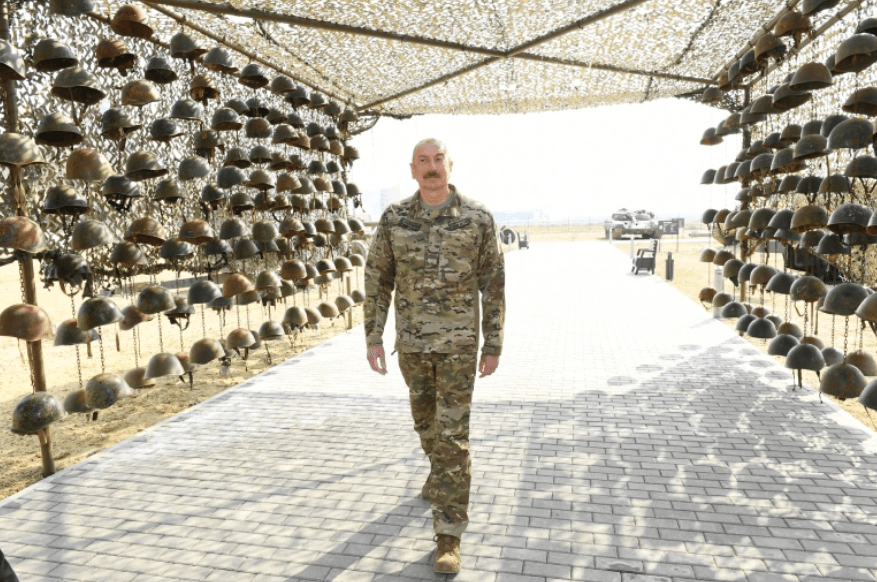
Tensions built on years and years of historical disputes, territorial disputes, and bloody wars reached a breaking point between Armenia and Azerbaijan in late September of 2020.
Al though a cease-fire agreement was made in November with the help of regional powers, mostly Russia, this deep-rooted dispute between the two countries is not going to disappear.
The conflict, which both sides point at each other for starting, has made a place in history known as the 2020 Nagorno-Karabakh war.
According to official figures released by the belligerents, Armenia lost 3,360 troops killed, while Azerbaijan lost 2,854 troops killed with 50 missing in action, stated in the BBC news article Nagorno-Karabakh conflict killed 5,000 soldiers.
The biggest problem of Nagorno Karabakh is that there’s an Armenian population inside an Azerbaijani-controlled area, which Armenia claimed should be its’ own after disputes sparked the First Nagorno-Karabakh War (1988–1994). As part of the cease-fire agreement on November 9, 2020, most of the territories lost by Azerbaijan during the First Nagorno-Karabakh war were returned to them.
A long seething tension between the two remains as so because Turkey, a large foe of the Armenian country, backs the Azerbaijan military and their side of the conflict, as even to this day Turkey does not recognize the genocide they committed towards the Armenian people over a hundred years ago.
The New York Times recently posted an article titled Armenia and Azerbaijan: What Sparked War and Will Peace Prevail? that goes into depth about this issue, stating, “But the tensions go back further, to at least World War I, during the fall of the Ottoman Empire, when Armenians were slaughtered and expelled from Turkey in what many, including the U.S. Congress and E.U. member states, recognize as genocide. That history, Armenians say, justifies their military defense of their ethnic enclave.”, which was the captured territory of Nagorno-Karabakh.
Noam Chomsky, a foreign international reporter, and journalist stated that Azerbaijan, “with Turkish backing, Israeli arms pouring in,” is an escalating force that needs international intervention. Israeli arms are being sent to Azerbaijan to be used for lethal force against Armenians in Nagorno Karabakh. On top of that, Chomsky elaborates on the conditions there, claiming “It’s horrible for the people there. It’s a very dangerous situation. It’s time for international diplomacy, for negotiations to take place to try to dampen in down.”.
Russian peacekeepers were deployed into the region on the border between both countries, residing mostly in Azerbaijan.
The BBC article Nagorno-Karabakh conflict killed 5,000 soldiers reflects upon the aftermath of the conflict beyond the acknowledgment of peace, highlighting some repercussions to the agreement itself. Even though Armenia has been backed by Iran, a force not to be reckoned with, the Armenian people are at a breaking point. The article states, “Armenian Prime Minister Nikol Pashinyan has come under intense pressure from protesters and opposition parties for agreeing the peace deal that left soldiers and civilians leaving three areas.”, and this disagreement has now escalated to the point where “Seventeen political parties have called for his resignation and for a new prime minister to be appointed.”.
Of the two countries, Armenia had to compromise the most, but that does not mean Azerbaijan was completely victorious. Andrew Kramer points out in his New York Times article another key factor in this agreement created by the Russian government, writing, “But Azerbaijan too had to compromise. Nearly 2,000 Russian troops, operating as peacekeepers, are now stationed on Azerbaijani territory. That gives Moscow a military foothold just north of Iran — one accompanied by risk, because it puts Russian troops in the middle of one of the world’s most intractable ethnic conflicts.”.
Al though this has provided protection for Armenia and territory returned to Azerbaijani, tensions are still high.
 Sierra Monet Glasgow